Understanding Epoxy Flooring
Epoxy flooring has garnered immense popularity in recent years for its durability, aesthetic appeal, and versatile applications. With a seamless finish that can transform spaces, epoxy flooring serves not just as a functional surface but also as a design element in homes and businesses alike. Among the premier choices for homeowners looking to enhance their spaces is Elevate Epoxy Flooring, which offers various options that combine quality and style.
What is Elevate Epoxy Flooring?
Elevate Epoxy Flooring refers to a category of flooring solutions that utilize epoxy resins to create a protective layer over concrete surfaces. This form of flooring is ideal for areas that experience heavy traffic or exposure to spills, making it a favored choice for garages, basements, commercial spaces, and even residential interiors. Its versatility allows it to be customized with colors, patterns, and textures that cater to different aesthetic preferences.
Components of Epoxy Flooring Systems
An epoxy flooring system typically consists of the following components:
- Base Material: This is usually made from resin and hardener, which when mixed initiate a chemical reaction that results in a durable finish.
- Flakes or Color Additives: These are often added to enhance aesthetic appeal and provide slip resistance.
- Top Coating: A clear coat that provides further protection against stains, chemicals, and UV light.
Benefits of Choosing Epoxy Flooring
Homeowners and business operators alike are increasingly turning to epoxy flooring for several compelling reasons:
- Durability: Epoxy floors can withstand heavy loads, making them ideal for garages and warehouses.
- Low Maintenance: Cleaning is straightforward, often requiring just soap and water.
- Aesthetic Flexibility: With endless customization options available from the Elevate Epoxy Flooring range, you can find a style that perfectly fits your needs.
- Environmentally Friendly: Many epoxy products are made with VOC-free materials, making them safer for both the installer and the environment.
Installation Process of Elevate Epoxy Flooring
The installation of epoxy flooring requires meticulous preparation and skilled application. Understanding each phase of the process can help homeowners appreciate the value of their investment.
Preparation Steps for Epoxy Application
Before installation, it’s crucial to prepare the concrete surface properly. This involves:
- Cleaning the area to remove any dust, oil, or grease.
- Repairing any cracks or imperfections in the concrete surface.
- Etching or grinding the surface to ensure the epoxy adheres correctly.
Application Techniques for Optimal Finish
The application process involves layering the epoxy in a particular sequence:
- Primer Application: A primer coat is applied to promote adhesion.
- Main Coat Application: The colored epoxy is poured and spread evenly across the surface.
- Adding Flakes (if desired): Decorative flakes can be broadcast over the wet epoxy for added texture and design.
- Topcoat Application: Once the main coat has cured, a clear topcoat is applied to enhance protection.
Post-Installation Care and Maintenance
After installation, it's essential to allow the epoxy floor to cure fully. Post-installation maintenance includes:
- Avoiding heavy foot traffic for the first 24-48 hours.
- Regular cleaning with a soft mop and pH-neutral cleaner.
- Addressing spills promptly to prevent staining.
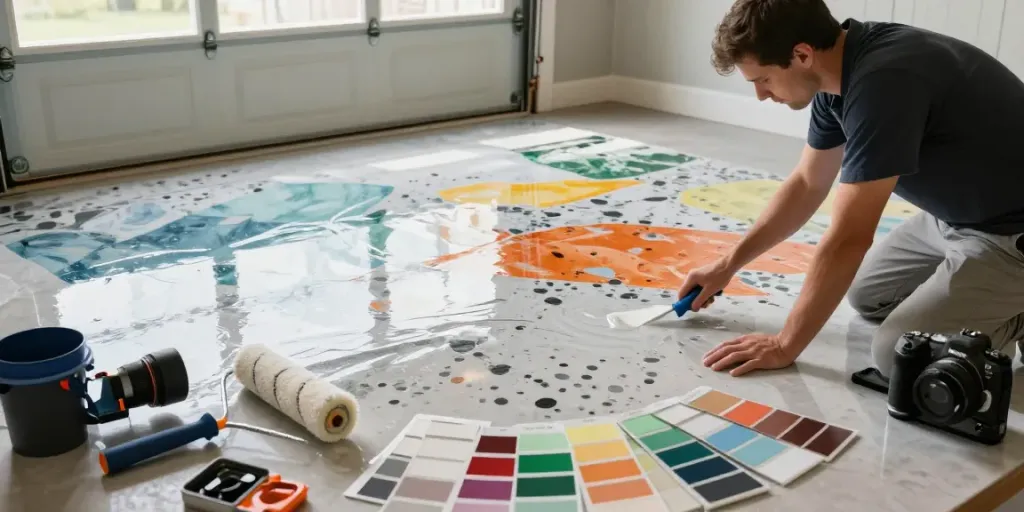
Exploring Color Options: The Flake Color Chart
Color selection is one of the most exciting aspects of installing epoxy flooring. The options available can dramatically change the appearance of a space.
Popular Flake Combinations for Residential Applications
Homeowners can choose from a variety of flake combinations that not only enhance aesthetics but also improve safety with added slip resistance. Popular choices include:
- Gray and white marble flakes for a classic look.
- Earthy tones of brown and beige for a warm, inviting atmosphere.
- Bright colors like blue and red for a modern, vibrant feel.
Customizing Epoxy Floors with Color Choices
Customization does not stop at color; homeowners can blend base colors, choose different flake sizes, and even incorporate unique patterns to create a one-of-a-kind floor that reflects their personal style.
Trends in Epoxy Flooring Colors for 2026
As we look ahead, several trends are emerging in the world of epoxy flooring:
- Neutral Tones: Shades of beige, gray, and taupe are gaining traction for their versatility and timeless appeal.
- Metallic Finishes: These provide a unique, high-gloss look that can make a space feel more upscale.
- Bold Patterns: Geometric patterns and contrasting colors will continue to make a statement.
Safety and Environmental Considerations
While epoxy flooring is a robust option for many, it is also essential to consider safety and environmental impacts.
Using VOC-Free Materials for Healthier Homes
Many epoxy products now utilize VOC-free materials, providing a safer indoor environment. Homeowners should prioritize these options to minimize air pollution during installation and beyond.
Environmental Impact of Epoxy Flooring
Epoxy flooring is generally environmentally friendly. It can be applied over existing flooring, reducing waste and the need for new materials. Additionally, its longevity reduces the need for frequent replacements, which is beneficial for the environment.
Best Practices for a Safe Installation
To ensure a safe installation, it is recommended that homeowners:
- Hire professional installers who understand the proper safety protocols.
- Ensure adequate ventilation during application.
- Wear appropriate protective gear during installation.
Future Trends in Epoxy Flooring
The evolution of epoxy flooring is ongoing, driven by advances in technology, design preferences, and environmental considerations.
Innovative Technologies in Flooring Solutions
Emerging technologies are making epoxy flooring even more appealing. Innovations such as self-leveling epoxies and quick-drying formulations streamline the installation process, reducing downtime for homeowners and businesses.
Predictions for Epoxy Flooring in 2026
As we look to the future, we expect to see an increase in eco-friendly solutions, with more companies focusing on sustainability. The use of recycled materials and the development of bio-based epoxies will likely become commonplace.
How Elevate Epoxy Flooring Stays Ahead of Competitors
Elevate Epoxy Flooring distinguishes itself by consistently incorporating customer feedback into their product offerings, providing cutting-edge designs, and ensuring that safety is a priority throughout every installation.
What are the costs associated with epoxy flooring?
The costs of epoxy flooring can vary widely based on factors such as the size of the area, the complexity of the design, and the materials chosen. On average, homeowners can expect to pay between $3 to $12 per square foot.
How long does epoxy flooring typically last?
With proper care and maintenance, epoxy flooring can last 10-20 years, making it a wise investment for both residential and commercial spaces.
Can epoxy flooring be installed over existing flooring?
Yes, one of the significant advantages of epoxy flooring is that it can be installed over most existing flooring materials, provided they are in good condition and properly prepared.
What kind of maintenance is required for epoxy floors?
Maintenance for epoxy floors is minimal. Regular sweeping and mopping with mild cleaners are typically all that’s needed to keep them looking new.
Are there any downsides to epoxy flooring?
While epoxy flooring has many benefits, it can be slippery when wet, which is why textured finishes or floor mats are recommended for high-traffic areas. Additionally, the installation process can be time-consuming, requiring several days, especially for larger spaces.